Biography
Yasunori Sakakibara was born in Aichi Prefecture, Japan, in 1967, where he continues to live and work. He graduated from the Department of Oil Painting at Tama Art University, Tokyo, in 1992.
During his early artistic development, he was deeply inspired by the painters of the Northern Renaissance, particularly Albrecht Dürer, Matthias Grünewald, and Jan van Eyck, and later studied the traditional techniques of egg tempera and oil painting developed during the Italian Renaissance.
One of the earliest formative experiences in his artistic life, however, occurred at the age of fourteen when he encountered Isao Tomita’s 1974 album Snowflakes Are Dancing. Often described by critics as “painting through sound,” the album evoked vivid visual and architectural imagery through electronic music. This experience left a profound impression on Sakakibara and became a lasting foundation of his artistic imagination.
While studying at university, he discovered the films of Akira Kurosawa. Through Kurosawa’s meticulously constructed cinematic world, Sakakibara developed a deeper understanding of the artist’s mission. Alongside the masterpieces of the European Renaissance, he also regards Japanese Buddhist paintings of the 10th to 12th centuries as one of the highest achievements in the history of art. Although painting has always been his principal medium, music and cinema continue to serve as essential sources of inspiration throughout his career.
In 1997, after exhibiting realist paintings depicting Japan’s landscapes and people, Sakakibara encountered contemporary Asian art at an exhibition in Tokyo. The experience profoundly changed his artistic direction. Soon afterward, he traveled to Thailand, where he became fascinated by the layered cultures, dynamic urban life, and rich textures of Asian cities—qualities he felt were gradually disappearing from contemporary Japan.
His travels subsequently expanded to India, Nepal, Hong Kong, Taiwan, and Indonesia. While conducting extensive field research and building relationships with local communities, he continued to produce artworks inspired by each region’s cultural landscape. Among these places, Kolkata, the former capital of British India, became especially significant. The body of work inspired by Kolkata remains one of the central pillars of his artistic practice.
Between 2013 and 2015, Sakakibara lived on the island of Guam. There he experienced firsthand the rapidly changing international environment and Japan’s place within it. He undertook extensive research into Guam’s complex history under Spanish, American, and Japanese rule, with particular attention to the relationship between Japan and Guam during the Second World War. These experiences strengthened his belief that individual human relationships transcend national borders and ethnic divisions, encouraging him to reconsider his own identity within a multicultural society.
During his stay in Guam, he collaborated with local artists and exhibited his work at the University of Guam. In 2016, he was the only Japanese artist selected to participate in the Festival of Pacific Arts and Crafts, where his work received widespread acclaim. One remark from a local viewer—“Your paintings reveal the essence of the East.”—prompted him to reflect more deeply upon his own cultural roots.
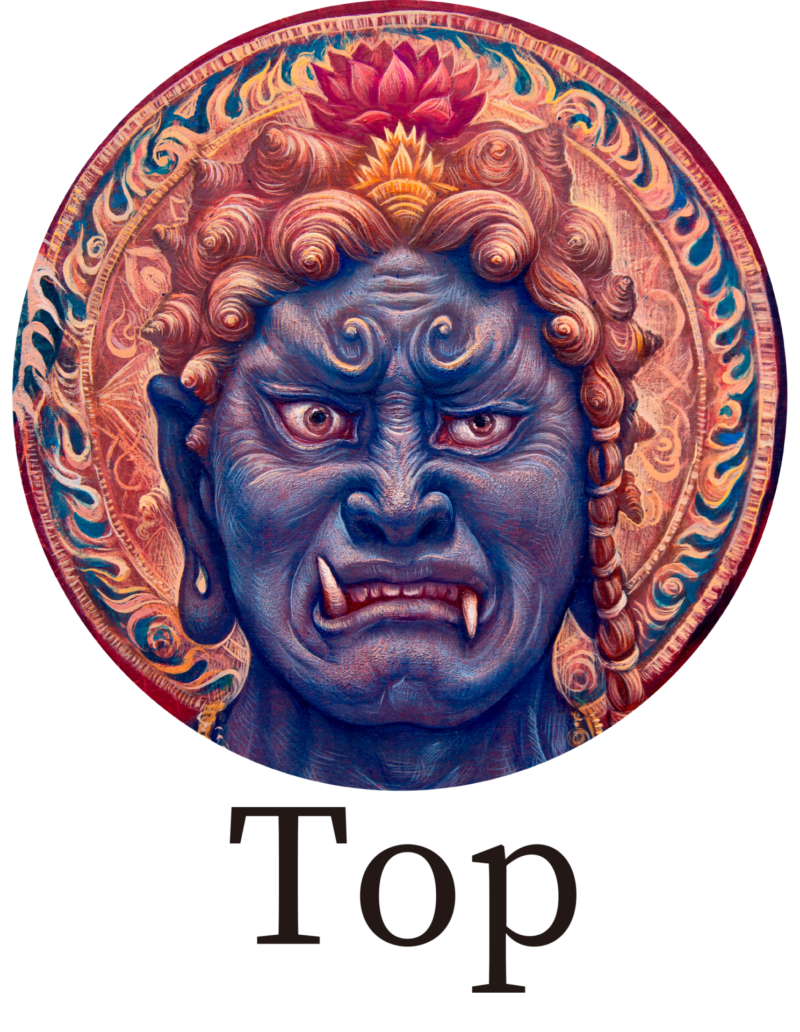
During the COVID-19 pandemic, Sakakibara reexamined his artistic identity within the broader context of Japanese and Asian culture, leading to a renewed commitment to Buddhist painting. His work seeks to depict both the material and metaphysical dimensions of existence through careful observation of nature and the built environment. Integrating diverse landscapes, histories, and cultures into unified pictorial spaces, his paintings transcend geographical and cultural boundaries.
Sakakibara also speaks about the importance of liberating the individual from excessive social conformity. He is particularly conscious of the lingering expectations of collective identity within Japanese society. Through his paintings, he hopes to provide viewers with a space in which they may freely experience the diversity and complexity of the world. He believes that carefully constructed paintings possess the power to embody the essence of reality itself, offering strength and inspiration to those who encounter them. His ultimate goal is to create enduring works that transcend temporary artistic trends and continue to resonate across generations.
Selected Exhibitions and Awards
1995
First exhibited at the 71st Hakujitsu-kai Annual Exhibition.
Nominated for the Main Exhibition Award.
Recipient of the Tokai Television Broadcasting Award.
2000
Solo Exhibition, Mitsui Marine Gallery, Okazaki, Japan.
Exhibited at the 76th Hakujitsu-kai Annual Exhibition and the 26th Chubu Hakujitsu-kai Exhibition.
2001
Promoted to Associate Member (Kaiyu) of Hakujitsu-kai.
2003
Promoted to Associate Member (Jun-kaiin) of Hakujitsu-kai.
2005
Recipient of the Tomita Award at the 81st Hakujitsu-kai Annual Exhibition.
Elected Full Member of Hakujitsu-kai.
2002, 2008
Silver Prize, Daio Grand Prize Exhibition.
2014
Grand Prize, Creative Hands, Isla Center for the Arts, University of Guam.
Collections
- Okazaki City Museum of Art, Aichi, Japan
- Daio Town, Shima City, Mie Prefecture, Japan
- Mayor’s Office, Toyokawa City Hall, Aichi, Japan